
Property Portfolio Singapore: Should You Own One Property or Build More Over Time?
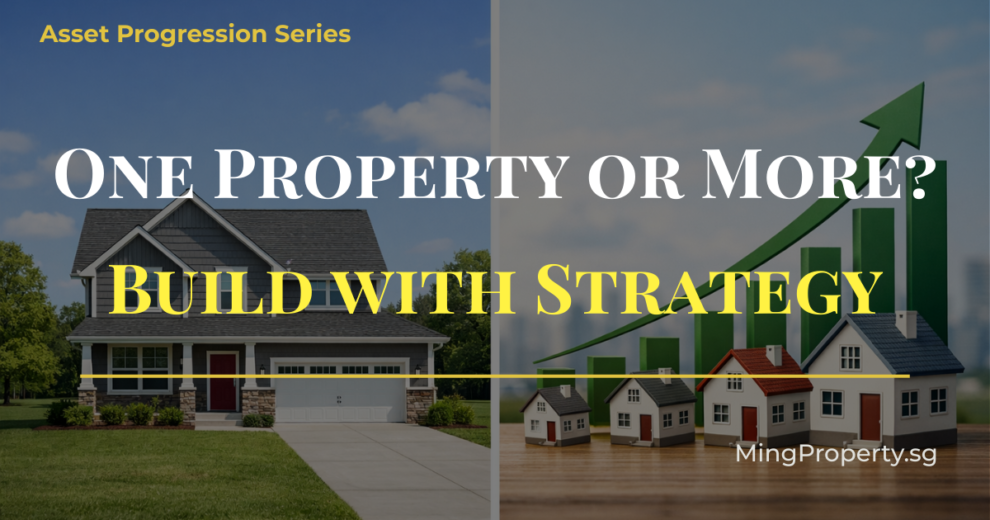
If you are thinking about property portfolio Singapore planning, you are already asking a more advanced question than most buyers. Many people focus only on their next purchase. They ask whether they should buy now, wait, upgrade, or sell. Those are important questions. But at some point, a more strategic question comes in. Should you simply own one property and optimise it well, or should you aim to build a property portfolio over time?
This is not a small question. In Singapore, property is expensive, highly regulated, and closely linked to cash flow, CPF usage, loan limits, and taxes. So while the idea of owning multiple properties sounds attractive, it is not always the right path for everyone. For some people, one well-chosen property is enough. For others, building a portfolio can create stronger long-term flexibility and wealth.
The key is not to follow hype.
The key is to understand what a portfolio means, what it demands, and whether it suits your financial stage, risk profile, and long-term goals.
That is what this article is about.
Why property portfolio Singapore planning is different from casual investing
A lot of people hear the word “portfolio” and immediately think of growth, passive income, and long-term wealth. That is understandable. Property in Singapore has long been seen as a core wealth-building tool. But building a property portfolio is not the same as casually buying another unit because prices seem to be rising.
A property portfolio requires planning.
You need to think about:
- entry points,
- holding power,
- financing structure,
- exit flexibility,
- and how each property fits into your broader life.
Unlike some other asset classes, real estate is illiquid. It takes time to buy and time to sell. Transaction costs are real. Government policies can affect affordability and demand. That means every acquisition should have a clear purpose.
The goal is not to collect properties.
The goal is to build a set of assets that work well together.
One well-positioned property can still be powerful
Before talking about multiple properties, it is worth saying something clearly.
You do not need a large portfolio to do well in property.
For many households, one strong property decision can already make a huge difference over time. A well-chosen home in the right location, bought at the right stage, with the right level of financial comfort, can support both lifestyle and long-term equity growth.
In fact, this is the foundation of why your first property should not be your dream home. A first property does not need to be the end goal. It can be a smart stepping stone that helps you progress with less strain and more flexibility.
Many people rush into the idea of multiple properties before even getting the first property strategy right. That usually leads to unnecessary pressure.
The sequence matters.
When one property may be enough
There are many situations where owning one property is the right strategy.
For example, if your main goal is housing stability, family comfort, and manageable debt, then one well-positioned home may already do the job very well.
One property may also be enough if:
- your income is still growing,
- your risk comfort is moderate,
- you prefer liquidity in other assets,
- or you simply do not want the stress of managing more than one real estate asset.
For many homeowners, upgrading over time is a more sensible path than expanding too quickly. That is why articles like HDB upgrade to condo Singapore and right time to upgrade property in Singapore matter. Property progression often starts with moving better, not multiplying early.
This is not small thinking. It is disciplined thinking.
When building a property portfolio may make sense
There are also cases where a property portfolio makes strategic sense.
This usually happens when a person or household has already built a solid financial base and wants to use property more intentionally for growth, income, or legacy planning.
A property portfolio may be worth exploring if:
- you have stable and strong income,
- you have healthy cash reserves,
- your debt is controlled,
- and you understand the trade-offs involved.
Some people want to create rental income. Others want to diversify across different property types or locations. Some want one owner-occupied home plus one investment asset. Others may be thinking further ahead for family planning or retirement positioning.
But even then, a portfolio should not be built for status.
It should be built for purpose.
The risks of trying to grow too fast
The idea of owning more than one property can be exciting. But fast expansion brings real risk.
The first risk is cash flow stress. A second property usually means more capital outlay, more financing pressure, and less room for error.
The second risk is overconfidence. Some buyers assume that because one property did well, every property decision will work out the same way. Markets do not reward assumptions for long.
The third risk is poor sequencing. If your first property sale, upgrade, or financing structure is not clear, trying to force portfolio growth too early can create more complexity than progress.
This is why it is important to understand sell first or buy first strategy before making big moves. It is also why you need clarity on CPF accrued interest in Singapore and negative cash sale in Singapore. Portfolio building only works when your fundamentals are in order.
A simple progression path for portfolio thinking
For most people, the path to a portfolio is gradual.
It often looks something like this:
Stage 1: Buy the first property well.
Stage 2: Build equity and improve income.
Stage 3: Review whether to upgrade, hold, or reposition.
Stage 4: Decide whether one property is enough or whether a second asset adds value.
Stage 5: Structure the portfolio for long-term fit, not short-term excitement.
This progression mindset is consistent with the 10-year property roadmap in Singapore. A portfolio is not usually built from one aggressive leap. It is built from a series of sensible steps.
Property portfolio Singapore planning starts with asset quality
If you want to build a portfolio, the quality of each asset matters more than the number of assets.
A weak property in the wrong location can drain time and capital. A better property with stronger demand and better liquidity can serve you for years.
That means you should assess:
- who the likely buyer or tenant is,
- how much competing supply is nearby,
- whether the entry price is sensible,
- and what the likely exit options are.
This is where OCR vs RCR vs CCR in Singapore becomes relevant. Different regions serve different goals. Some may offer stronger upgrader demand. Some may be more rental-driven. Some may be more prestige-led but slower to move.
A portfolio is not just about owning more. It is about owning better.
The role of rental income in a portfolio strategy
Many people are drawn to portfolio thinking because of rental income.
Rental income can be valuable. It can improve holding power, offset part of the mortgage, and add a second source of recurring inflow. But it should never be treated as guaranteed or effortless.
Rental income depends on:
- location,
- tenant demand,
- property type,
- maintenance,
- and your ability to hold through weaker periods.
You should always ask:
- If rent softens, can I still hold this property comfortably?
- If the property is vacant for a period, does that create stress?
- Is the yield worth the entry price and total risk?
A sound portfolio is not built on best-case assumptions. It is built on reasonable downside planning.
Lifestyle goals still matter in a property portfolio Singapore strategy
A portfolio is not only about returns.
Your personal life still matters.
Some people would rather own one better home and enjoy more space, comfort, and simplicity. Others are willing to live more modestly for a period because they value future portfolio growth more.
Neither is automatically right.
What matters is alignment.
If your goal is stability and family comfort, building a portfolio too early may create more anxiety than benefit. If your goal is long-term asset building and you have the capacity to support it, then portfolio thinking may be worth exploring.
This is also connected to hold or sell property Singapore decisions. Sometimes the first question is not “Should I buy another one?” It is “Should I keep the current one at all?”
Example 1: One property done well
A couple buys a resale HDB in a good location. They keep debt manageable, review their position after several years, and eventually upgrade into a private condo with healthy financial comfort.
They do not rush into investment property. They focus on one property that supports lifestyle and capital growth. Over time, this creates strong equity and lower stress.
This is often a very good strategy.
Example 2: Gradual portfolio growth
Another buyer starts with a private home and holds it well. Income grows steadily. Savings improve. The owner reviews the asset, understands sale proceeds, and decides not to over-upgrade lifestyle yet.
Instead, they position the first property well and explore whether a second asset makes sense later as part of a broader property portfolio Singapore strategy.
This works because the base was strong, the numbers were reviewed, and the move was paced.
Example 3: Portfolio ambition without structure
A third buyer becomes excited by rising prices and tries to force multiple moves quickly. They underestimate CPF refund, cash requirements, and financing strain. They chase the idea of portfolio growth without fully planning holding power.
This is where the concept becomes dangerous.
Ambition without structure often leads to pressure.
What questions should you ask before building a portfolio?
Before trying to grow beyond one property, ask:
- Do I have enough cash reserves after all costs?
- Can I hold through rate changes or rental gaps?
- Is my first property still the right asset to keep?
- Am I trying to build wealth, income, flexibility, or prestige?
- Would another property improve my position or just complicate it?
These questions may sound basic, but they are powerful.
A strong portfolio is usually the result of honest answers, not aggressive assumptions.
The best portfolio strategy may still begin with one move
For many people, the best next step is not a second property.
It may be:
- choosing the first property better,
- upgrading more safely,
- reviewing the hold-or-sell question properly,
- or improving the structure of the current asset.
That is why the earlier parts of this series matter so much. Before anyone thinks about a portfolio, it helps to understand:
Why your first property should not be your dream home,
Buy BTO or Resale in Singapore,
HDB upgrade to condo Singapore,
and hold or sell property Singapore.
Portfolio thinking is not a separate world. It sits on top of the basics.
Final thoughts on property portfolio Singapore strategy
A property portfolio Singapore plan can be a smart long-term strategy for some people. But it is not the only smart strategy.
One well-positioned property may be enough.
A gradual portfolio may work better than fast expansion.
A portfolio should support your life, not dominate it.
The goal is not to own more for the sake of it.
The goal is to make property decisions that are aligned, sustainable, and useful over time.
That is what good strategy looks like.
What’s Next For You
If you are thinking about whether to stay with one property or build a portfolio over time, the best next step is a proper review of your current position.
At Ming Property, I help clients think through:
- their current property stage,
- their likely next move,
- their upgrade or hold decision,
- their cash flow and holding power,
- and whether a wider property strategy really makes sense.
If you want a clearer view of your next step, WhatsApp me direct at +65 9105 7009.
A stronger property strategy usually starts with one honest conversation.