
Renting Out Your Property in Singapore: Should You Lease It Out or Sell It?
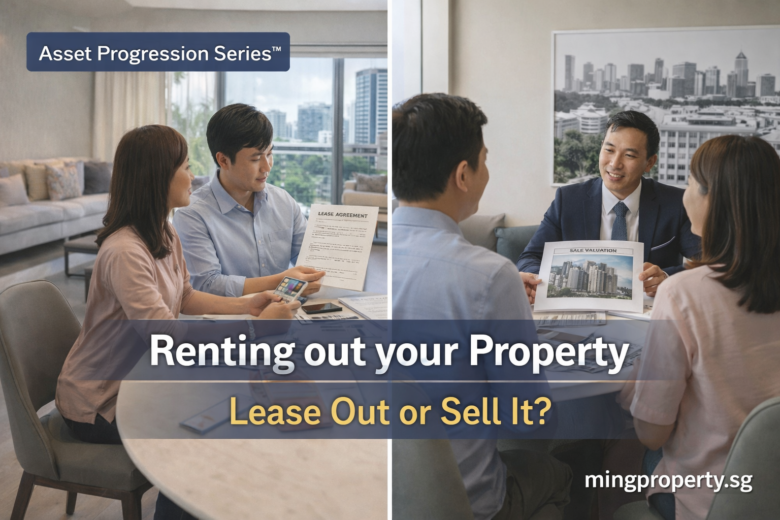
If you are thinking about renting out your property in Singapore, you are likely standing at an important decision point. Some owners reach this stage after upgrading. Some inherit a property. Some feel their current home has appreciated and are wondering if they should keep it for rental income instead of selling. Others simply want to know whether leasing it out gives them a better long-term position than cashing out today. This is a very practical question, and in many cases, the answer is not obvious. The decision to keep a property and lease it out, or to sell it and unlock the capital, should be based on strategy, not just sentiment.
A lot of property owners assume renting is always better because it creates income. Others assume selling is always better because it frees up cash. Both views are incomplete.
The real question is this:
Should this property continue serving you as a rental asset, or has it already done its job and should now be sold?
That is the real decision.
A smart answer requires you to compare cash flow, growth potential, future risks, and how this property fits into your next stage. The best choice is rarely emotional. It is usually the one that supports your long-term property plan with the least unnecessary strain.
Why this lease or sell decision matters more than many owners realise
This is not just a simple owner decision.
It can affect:
- Your monthly cash flow
- Your future upgrade ability
- Your portfolio structure
- Your exposure to risk
- Your flexibility over the next few years
A property is not just a physical space. It is also a financial asset.
That means the right question is not only:
“Can I rent it out?”
The better question is:
“Should I rent it out, or would selling give me a stronger position?”
For some owners, leasing the property out can create a useful income stream and preserve long-term upside. For others, keeping the property may tie up too much capital in an asset that no longer fits their goals.
This is why renting out your property in Singapore should always be reviewed through a bigger strategic lens.
Start with the role of the property in your overall plan
Before looking at numbers, start with purpose.
Ask yourself:
What is this property supposed to do for me now?
Is it meant to:
- Produce rental income?
- Preserve long-term value?
- Be a stepping stone to another move?
- Be part of a wider investment plan?
- Be held for emotional or family reasons?
Sometimes owners keep a property simply because they do not want to “let go” of it. That is understandable. But attachment is not the same as strategy.
This links closely to hold or sell property Singapore. Not every property that can be held should be held. And not every property that can be rented should automatically become a rental asset.
The key is to decide based on what the property is meant to do from here.
Renting out your property in Singapore can look attractive, but the gross rent is not the real story
Rental income always looks appealing at first glance.
A property owner may think:
“If I can collect rent every month, why would I sell?”
That sounds logical. But gross rent is not the same as real return.
You need to look at net rental outcome.
That includes:
- Monthly loan repayment
- Property tax
- Maintenance fees
- Agent fees for finding tenants
- Repairs and upkeep
- Vacancy periods
- Possible wear and tear
- Time and effort spent managing the property
A unit that rents out for a decent headline amount may still produce a weak real return if costs are high.
That is why you should not ask only:
“How much rent can I collect?”
You should also ask:
“How much do I really keep, and is it worth the capital tied up in this property?”
When leasing out the property may make sense
There are situations where renting out your property in Singapore can be a very good move.
This is more likely when:
- The property is in a location with healthy tenant demand
- The rent is strong relative to your holding cost
- You have enough cash flow to handle temporary vacancy
- The property still has future upside
- Selling now would not improve your position much
- You are building toward a wider property portfolio Singapore strategy
For example, an owner with a well-located city-fringe condo may find that the unit rents consistently and still has longer-term appeal. If the owner does not urgently need the sale proceeds and the holding structure is comfortable, renting out may be the right choice.
Another example is an owner who has moved into a new home but still holds an older property with stable demand. If the rental yield is sensible and the property continues to serve a strategic role, leasing can work well.
When selling may be the better move
Selling may be better when the property no longer works well as an asset.
This may happen when:
- Rental yield is weak relative to the value of the property
- Maintenance and holding costs are rising
- Future growth looks limited
- There is a lot of competing supply nearby
- You need to unlock capital for a stronger next move
- The property no longer fits your broader strategy
For example, a resale condo may have appreciated nicely, but rent may not be strong enough to justify holding a large amount of capital inside it. If the owner can reposition the proceeds into a better home, stronger asset, or safer structure, selling may be smarter than forcing a rental strategy.
This is where property exit strategy Singapore will eventually become an important supporting topic in your series. Every property should have an eventual review point.
Compare rental yield against your opportunity cost
One of the most useful questions is this:
If I keep the property, is the return worth the capital I am locking inside it?
This is where opportunity cost matters.
Imagine this:
A property is worth $1.6 million.
It rents out reasonably well.
But after all costs, the net return is modest.
At the same time, the sale proceeds could significantly improve your financial flexibility, reduce debt, or help fund a better-positioned next purchase.
In that case, holding is not automatically the better decision.
You are not only comparing rent versus sale.
You are comparing:
keep-and-collect income
versus
sell-and-redeploy capital.
That is a more intelligent comparison.
Review your sale proceeds properly before deciding
Before deciding to lease out or sell, you must understand your real net sale position.
This means reviewing:
- Estimated market value
- Outstanding loan
- Legal and selling costs
- CPF refund obligations
- Actual cash proceeds after the sale
This is where CPF accrued interest in Singapore becomes essential. Some owners think they will receive a large usable amount from a sale, only to realise later that a big portion returns to CPF.
You should also be aware of negative cash sale in Singapore if the numbers are tight. A property can appear profitable on the surface and still leave you with less free cash than expected after settlement.
Without this review, the lease-versus-sell decision is incomplete.
Think about your next move, not just this property
A lot of owners look at the current property in isolation.
That is a mistake.
The better question is:
How does this choice affect my next move?
For example, if selling this property allows you to:
- Upgrade more safely
- Reduce financial pressure
- Enter a stronger asset
- Improve cash reserves
- Simplify your portfolio
Then selling may be the better strategic move.
If holding the property allows you to:
- Build stable rental income
- Maintain long-term upside
- Support a wider investment strategy
- Keep future options open
Then leasing may make more sense.
This is why the decision connects naturally to 10-year property roadmap in Singapore. A property should not only be reviewed for what it does today. It should also be reviewed for what it enables tomorrow.
Real examples of lease or sell decisions
Example 1 — lease it out
An owner moves from a city-fringe condo into a larger family home. The original condo has:
- Strong rental demand
- Manageable mortgage
- Limited nearby competition
- Decent rental yield after costs
The owner does not urgently need the sale proceeds and wants to keep exposure to this segment.
In this case, renting out your property in Singapore may be a sound choice.
Example 2 — sell it
Another owner holds an older condo in a location with many newer projects nearby. Rental is possible, but the net return is weak after costs. The owner also wants to reduce debt and improve flexibility for a future move.
Here, selling may be the stronger move.
Example 3 — wait and review properly
A third owner is emotionally attached to the property and assumes renting must be better. But they have not reviewed:
- Actual rental demand
- Maintenance exposure
- Sale proceeds
- Loan stress
- Net yield
In this case, the right answer is not yet lease or sell. The right answer is: review properly first.
The property type and region also affect the answer
Not all properties perform the same way as rental assets.
This is where OCR vs RCR vs CCR in Singapore becomes relevant. Different regions can have different tenant pools, demand profiles, and owner strategies.
Likewise, new launch vs resale condo Singapore may affect how the property performs over time. A newer project may attract a different tenant profile compared to an older resale development. A city-fringe unit may rent more smoothly than a suburban luxury unit. A compact unit may outperform a very large one in tenant demand, even if the larger one looks more impressive.
So the lease-or-sell decision should always consider:
- Unit type
- Location
- Tenant demand
- Future competition
- Exit flexibility
If you are upgrading, structure matters even more
For owners who are moving from one home to another, the lease-or-sell decision is often tied to upgrading.
That is especially true for HDB upgrade to condo Singapore or for private owners moving into another segment.
This is where sell first or buy first strategy becomes important. If you intend to lease out one property while buying another, the timing, financing, and overall holding structure must be reviewed carefully.
Do not assume you can simply “keep one and buy another” without pressure.
The sequence matters.
The financing matters.
The margin of safety matters.
Renting out your property in Singapore should not be a default decision
Many owners treat renting as the default “safe” option.
That is not always correct.
Renting can be smart. But it should not be automatic.
You should only lease out a property when:
- The numbers make sense
- The holding risk is manageable
- The asset still fits your long-term goals
- The return justifies the capital locked inside it
Otherwise, selling may actually be the more strategic and lower-stress decision.
Final thoughts on renting out your property in Singapore
The question of renting out your property in Singapore is not really about rent alone.
It is about whether this property still deserves a place in your long-term plan.
For some owners, leasing it out is the right move.
For others, selling and redeploying the capital is stronger.
For many, the answer only becomes clear after reviewing the real numbers.
Do not decide based on assumption.
Do not decide based on attachment alone.
Do not decide based on gross rent headlines.
Review the property as an asset.
Then choose the path that supports your next stage best.
What’s Next For You
If you are deciding between leasing out your property or selling it, the best next step is a proper review of the numbers and your broader strategy.
At Ming Property, I help owners look at:
- Rental potential and tenant demand
- Sale proceeds after loan and CPF refund
- Holding cost and real cash flow
- Upgrade or reinvestment options
- Whether the property still fits your long-term plan
If you want a clearer view before you make the decision, WhatsApp me direct at +65 9105 7009.
A clear strategy can help you avoid a costly decision made for the wrong reason.
#SingaporeProperty
#PropertyRental
#PropertyStrategy
#AssetProgression
#PropertyPlanning
#MingProperty