
Property Exit Strategy Singapore: When and How Should You Plan Your Exit?
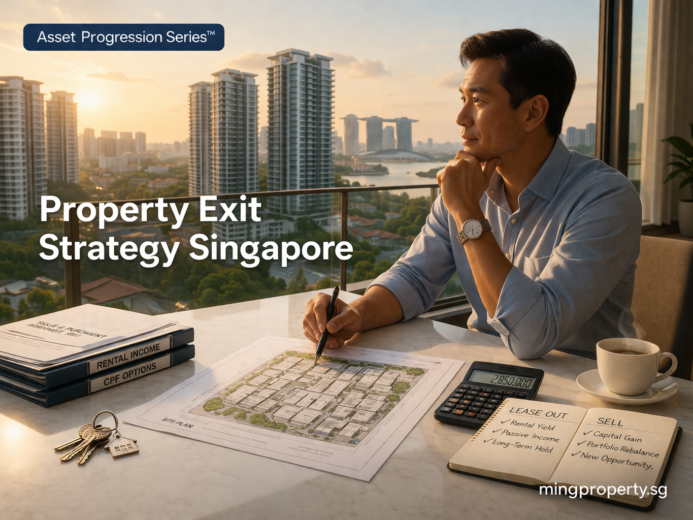
A smart property exit strategy Singapore plan is not something you leave to chance. Most owners spend a lot of time thinking about how to buy, how to finance, and how to upgrade. But many forget to think about how they will one day sell, restructure, right-size, or pass the asset forward. That is where a proper property exit strategy Singapore approach matters. It helps you protect gains, reduce stress, avoid rushed decisions, and move into your next property stage with confidence.
Many people only think about selling when pressure shows up. It may be a loan issue, a change in family plans, a weak rental market, or a surprise need for cash. By then, the sale becomes reactive. In real life, the best exits are often planned early, even if the actual move only happens years later.
An exit strategy does not always mean “sell now.” Sometimes the right answer is to hold. Sometimes it means to sell one property and recycle capital. Sometimes it means to right-size from a larger home into a smaller one. Sometimes it means to exit an underperforming asset and move into a stronger property or into a more stable stage of life. The real question is not whether you should sell because the market is noisy. The real question is whether your current property still matches your goals.
Why every owner needs a property exit plan in Singapore
Property is a high-value asset. That means one decision can affect your cash flow, retirement comfort, family options, and future loan flexibility. In Singapore, sellers also need to think about transaction timing, CPF refunds, and holding periods. For example, Seller’s Stamp Duty may apply if a residential property is sold within the applicable holding period, and CPF funds used for the home generally have to be refunded with accrued interest when the property is sold.
Without a plan, owners often make one of these mistakes:
- Holding too long because they are emotionally attached
- Selling too early without a clear next step
- Upgrading before understanding actual sale proceeds
- Underestimating CPF refund impact
- Missing timing because they did not review the holding period
- Choosing a move that creates avoidable stress at completion stage
A clear exit plan helps you answer simple but important questions:
- What is this property meant to do for me?
- Is it still serving that purpose today?
- What would make me hold, sell, or restructure?
- What timeline would give me the best control?
- What is my next step after the exit?
That is how strategy replaces guesswork.
The best time to plan your property exit strategy Singapore
The best time to plan your exit is usually not when you are desperate to move. It is when you still have choices.
You should ideally review your property exit strategy at these points:
- Around 6 to 12 months before your intended move
- When your family size changes
- When your mortgage or monthly cash flow becomes uncomfortable
- When your rental yield stops making sense
- When the property no longer fits your long-term lifestyle
- When you are thinking about retirement or legacy planning
- When market conditions create a good window to reposition
Planning early gives you time to understand your numbers, your legal timelines, and your next move. If the property is an HDB flat, sellers should also note that HDB states resale completion is about 8 weeks after HDB accepts the resale application, while approval of the resale application is generally granted about 2 weeks after both parties endorse documents and make the required payments.
That timeline matters because many sellers are not just exiting one home. They are coordinating a purchase, temporary stay, renovation schedule, family move, and financing plan all at once.
Signs it may be time to sell instead of hold
Not every property should be kept forever. A property can be a good asset and still no longer be the right asset for you.
Here are common signs an exit may be worth serious review:
1. Your cash flow is getting too tight
If the property drains your monthly finances, it can limit future choices. A home should support your life, not trap you in constant pressure. This is even more important when interest costs, upkeep, and lifestyle costs start rising faster than your comfort level.
2. The property no longer fits your life stage
A couple may outgrow a small unit after children arrive. Empty nesters may no longer need a large family home. Older owners may prefer a more efficient layout, better location, or simpler maintenance.
3. The asset is underperforming
For investors, an underperforming asset may show up as weak rent, high vacancy, poor tenant profile, or limited long-term upside. That does not automatically mean “sell now,” but it does mean the property should be reviewed against better alternatives.
4. Your equity can work harder elsewhere
Sometimes the property has already done its job. It has appreciated, served your family, or helped you build capital. The next smart move may be to unlock equity and redeploy it.
5. Your risk exposure is too concentrated
If too much of your net worth sits in one property type, one location, or one holding structure, it may be time to rebalance. This is especially relevant for owners building a wider property portfolio Singapore plan.
When holding may still be the better choice
Selling is not always the best answer. Some owners should hold even when they feel tempted to act.
You may choose to hold when:
- The property still supports your original goal
- The sale costs are too high relative to the benefit
- You are still within an SSD-sensitive period
- You do not yet have a stronger replacement plan
- Rental demand and ownership cost still make sense for your case
- You would be selling mainly out of fear or noise
Seller’s Stamp Duty on residential property can apply when the property is disposed of within the relevant holding period, so timing matters when you assess whether an early sale makes financial sense.
That is why one of the most useful first decisions is to review the classic hold or sell property in Singapore question through your personal numbers, not through headlines.
The 7-step framework to build your exit strategy
A practical exit plan should be simple enough to use and detailed enough to guide action.
1. Define your exit goal
Start with the end in mind. Ask yourself what success looks like.
Examples:
- Sell and upgrade to a family-sized home
- Sell and right-size for retirement
- Exit a weak investment and buy a stronger one
- Sell to reduce debt and improve liquidity
- Free up capital for children’s education or business plans
- Simplify your portfolio and reduce stress
Your exit plan must match your life plan.
2. Estimate your true sale proceeds
This is where many owners get surprised. The selling price is not the same as the amount you take home.
You need to review:
- Outstanding loan
- Agent commission
- Legal fees
- CPF refund amount used for the property plus accrued interest
- Any potential SSD exposure
- Other moving or transition costs
CPF states that when you sell a property bought using CPF savings, you generally need to refund the CPF principal used and the accrued interest, and if you had pledged the property to meet your retirement sum, the pledged amount may also need to be refunded depending on your situation.
This is exactly why owners facing a negative cash sale in Singapore scenario need to do a proper proceeds check early. Some sales look profitable on paper but do not produce much cash after refunds and costs.
3. Review your timing window
Timing is not only about market price. It is also about your own readiness.
Check:
- Is there SSD exposure?
- Do you need time to prepare the home for sale?
- Do you need a replacement home first?
- Do you need temporary housing?
- Do you need time to settle family decisions?
A good exit is often a coordinated move, not just a single transaction.
4. Decide your transition strategy
Many owners struggle with the next question: should you sell first or buy first?
This depends on:
- Cash reserves
- Loan eligibility
- Risk tolerance
- Household size
- Flexibility on moving dates
- Availability of temporary housing
There is no one-size-fits-all answer. A cautious owner may prefer a sale-first approach for clarity. A strong-balance-sheet owner may prefer to secure the next property first, then exit the current one with a clearer destination. This is where a sell first or buy first strategy becomes a major part of your exit planning.
5. Prepare the property as a product
Your property is not just a home during sale. It becomes a market-facing product.
That means you should review:
- Pricing position
- Presentation and staging
- Photography and marketing
- Buyer profile
- Timing of launch
- Negotiation strategy
A well-planned exit is not only about deciding to sell. It is about selling well.
6. Know your fallback options
Every good strategy needs backup paths.
Examples:
- If the asking price is not met, do you hold?
- If you find a buyer before securing your next place, do you request flexibility?
- If the timeline becomes tight, do you have interim housing?
- If the market turns soft, do you lease instead of sell?
A backup plan reduces emotional pressure during negotiation.
7. Match the exit to your next asset stage
A property exit should lead somewhere meaningful.
Possible next stages include:
- Moving from one home to a better-fit home
- Converting a large home into stronger liquidity
- Rebalancing from one asset into a broader property portfolio Singapore structure
- Reducing risk near retirement
- Creating a more efficient long-term holding plan
This is why selling should not be treated as the end. It is part of a larger progression strategy.
Common mistakes owners make when exiting property
Many sellers lose value not because the market is bad, but because the process is weak.
Avoid these mistakes:
- Waiting until financial pressure forces a rushed sale
- Using an emotional price instead of a market-based strategy
- Ignoring CPF refund impact
- Forgetting the holding period and SSD rules
- Buying the next property before confirming actual affordability
- Focusing only on sale price and not net outcome
- Having no plan for post-sale housing
The strongest sellers are often not the ones who get the highest offer on day one. They are the ones who understand the whole picture from proceeds to transition to next move.
Exit strategy for homeowners versus investors
Not all exits should be evaluated the same way.
For homeowners
A homeowner should focus on:
- Family needs
- School or work location
- Lifestyle fit
- Affordability
- Future flexibility
- Retirement comfort
The best exit may be one that creates more peace, better cash flow, and a home that suits the next life stage.
For investors
An investor should focus on:
- Net yield
- Capital efficiency
- Vacancy risk
- Maintenance drag
- Opportunity cost
- Portfolio concentration
- Reinvestment potential
This is why an investor’s exit is often less emotional and more numbers-based. The goal is not just to sell at a gain. The goal is to improve overall portfolio quality.
A simple real-life way to think about your exit
Here is a useful framing.
Ask these three questions:
“If I owned this property in cash today, would I still choose to keep it?”
If the answer is no, that is a signal worth examining.
“What is this property helping me achieve in the next 3 to 5 years?”
If you cannot answer clearly, the asset may no longer have a strong role in your plan.
“What happens if I do nothing for the next 12 months?”
If doing nothing creates more strain, less flexibility, or missed opportunity, then the exit conversation should start now.
That does not mean you must sell immediately. It means you should act intentionally.
Final thoughts
A strong property exit strategy Singapore plan is about clarity, not panic. You do not need to sell just because the market is active. You also should not hold blindly just because you are used to the property. The right move comes from understanding your purpose, your numbers, your timing, and your next stage.
The owners who do best are usually the ones who plan early. They know their net proceeds. They understand their CPF position. They review timing carefully. They compare hold versus sell based on life goals, not noise. Most importantly, they know what the exit is meant to unlock.
If your current property still serves you well, hold with confidence. If it no longer fits, then plan your exit with structure and intention. A property should move your life forward. When it stops doing that, it may be time to make your next move.
What’s Next For You
If you are thinking about selling, right-sizing, upgrading, or restructuring your property holdings, start with the numbers and the purpose behind the move. A clear exit plan can save you from costly missteps and help you progress with confidence.
Message me for a personalised review of your property situation, estimated sale proceeds, exit timing, and next-step options.
WhatsApp me direct: +65 9105 7009
Suggested hashtags:
#PropertyExitStrategySingapore #SingaporeProperty #PropertySellingSingapore #AssetProgressionSeries #PropertyUpgrade #RightSizingSingapore #SingaporeRealEstate #PropertyPortfolioSingapore #MingProperty