Preparing your home for sale in Singapore starts with making it clean, easy to understand and comfortable to view. You do not need to turn a lived-in home into a showroom or commit to an expensive renovation.
Help buyers see the space, condition and everyday use of each room. The aim is an accurate first impression, followed by a viewing that feels consistent with the photographs.
A sensible order of work
- Resolve: check maintenance issues and decide what needs attention.
- Prepare: clean, clear circulation space and organise each room.
- Present: photograph accurately and agree on a manageable viewing routine.
1. Walk through the home as a buyer would
Start at the entrance and follow the route a visitor would take. Notice blocked walkways, dim corners, crowded surfaces and anything that makes a room’s purpose difficult to understand.
Look beyond decoration. A buyer may want to know whether a bedroom fits a bed and desk, where laundry dries, or how the household moves between the kitchen and dining area.
Ask your agent to identify the home’s useful features and its limitations. Agree on what the photographs should explain, rather than relying on a collection of attractive but uninformative close-ups.
2. Separate maintenance from optional styling
List issues such as a dripping tap, a loose handle, a damaged light fitting or signs of water leakage. Investigate the cause and use an appropriate professional where necessary.
Do not paint over an unresolved leak or hide damage behind furniture. If a matter remains unresolved, discuss how to explain it accurately and confirm any disclosure obligations with your conveyancer.
For an HDB flat, check previous alterations and relevant approvals early. HDB’s resale procedures state that sellers must regularise or remove unauthorised renovation works found in the flat before completion.
Refer to HDB’s resale procedures and renovation permit guidance. Ask HDB about uncertain works before commissioning changes or promising a buyer that everything is approved.
3. Spend where there is a clear purpose
Cleaning, removing excess items and dealing with small maintenance problems may be enough to prepare the home. New flooring, built-in carpentry and extensive renovation involve a different level of cost and disruption.
There is no assured dollar-for-dollar recovery of renovation spending. Buyers may have different tastes or plan to renovate regardless of the existing finishes.
Before approving optional work, ask what problem it solves, what it costs and whether delaying the listing is worthwhile. Compare preparing the home in its current condition with making the proposed improvement.
Keep the preparation budget separate from your expected sale proceeds. Our property exit strategy guide explains the wider costs and funding checks before a sale.
4. Make the space easier to read
Clear walkways, reduce items on worktops and organise open shelving. Keep enough furniture to show scale and how the room works. An empty room is not automatically easier for a buyer to assess.
Use the furniture you have where possible. A simple rearrangement may make access clearer without requiring rented staging furniture or storage for the whole household.
Clean windows where safely accessible, open suitable curtains and use working lights. Check ventilation and address the source of persistent odours rather than relying on strong fragrance.
Your family still needs to live comfortably. Agree on a realistic standard you can maintain between viewings, especially when children, older family members or pets are at home.
5. Plan photographs and video that represent the home honestly
Choose a time when the home’s natural light is helpful, and allow enough time to photograph the key spaces. Ask for an overall room view before detail shots of finishes or fittings.
Show the layout, storage and relevant outlook without using angles that make the space misleading. Check that any published floor plan corresponds to the home and explain alterations that affect its interpretation.
Review edited images before publication. Digital staging or illustrative layouts should be clearly identified. They should not disguise defects, change the actual view or suggest that structural changes already exist.
Remove visible identity documents, financial papers, family photographs and other private information you do not want published. Check mirrors and screens too. Agree on filming arrangements with occupants before photography begins.
Keep a copy of the approved photographs and listing text. Update the listing if the condition or included items change during marketing.
6. Agree on a viewing routine before enquiries arrive
Decide which days and times are workable, how much notice you need and who will coordinate access. Grouping appointments may help some households; others need more flexibility.
If the home is tenanted, check the tenancy terms and agree on access arrangements with the tenant. Ownership should not be treated as permission to enter whenever convenient.
Before each viewing, secure valuables and private documents, clear the main surfaces and make the route through the home comfortable. Decide how to manage pets and any rooms that need special arrangements.
Give buyers room to look and ask questions without making the household feel displaced. Your agent can explain the agreed features, record questions and follow up on information that needs confirmation.
7. Use feedback to decide what to change
Ask for specific feedback about layout, condition, asking price and completion arrangements. A repeated concern deserves examination, but one visitor’s preference is not a reason to renovate immediately.
If the listing attracts enquiries but few viewings, review the information and access arrangements. If buyers view but do not offer, compare their feedback with the competing homes they can choose.
Presentation and price work together. Better photographs cannot resolve every pricing gap. Read our home pricing guide before deciding whether the next change should be to the listing, the viewing arrangements or the asking price.
Your pre-photography and viewing checklist
- Check maintenance issues, previous alterations and relevant approvals.
- Agree on a preparation budget before optional work begins.
- Clean the home and clear the main walking routes.
- Show each room’s function without overcrowding it.
- Remove private information from photographs and video.
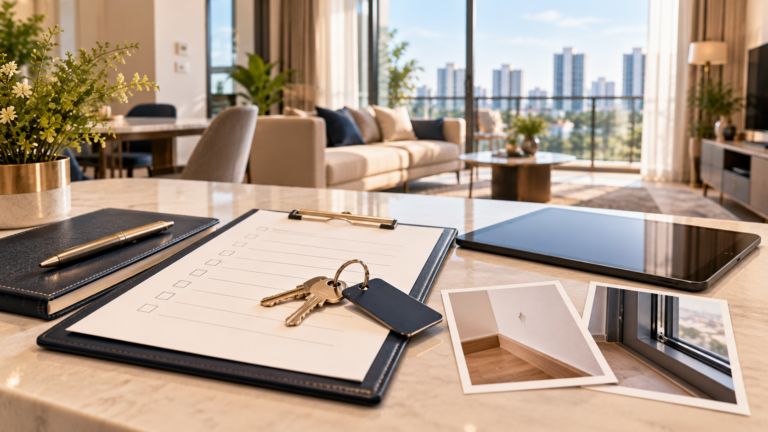
- Review images, floor plans and listing descriptions for accuracy.
- Agree on notice periods, access and occupant arrangements.
- Record viewing feedback and set a date to review progress.
Common questions before preparing a home for sale
Do I need to renovate before selling?
Usually, start by assessing condition and essential work. Optional renovation needs a clear purpose and a budget you are comfortable spending without an assured increase in the eventual sale price.
Is professional staging necessary?
It is an option, not a requirement. Ask what the proposal would improve and compare its cost with cleaning, decluttering and rearranging existing furniture.
Should I move out before viewings begin?
That depends on your accommodation, finances and household needs. Many homes are marketed while occupied. A practical viewing routine may be more suitable than paying for a separate place to stay.
A preparation plan that fits your household
Francis and Hui Ming can walk through the home with you, discuss what deserves attention and agree on a presentation and viewing plan before marketing begins.
Return to Selling Your Home, Step by Step →
Reviewed 18 October 2026. General preparation guidance for Singapore homeowners. Confirm property-specific renovation, tenancy and contractual matters with the relevant authority or professional.